Why routines fall apart with ADHD
A routine that lives in memory asks an ADHD brain to do exactly the things it finds hardest: hold a sequence in working memory, feel time passing, and start non-preferred tasks. When your child stalls halfway through getting dressed, they usually haven't refused the routine — they've lost it. That's why repeating instructions louder doesn't work, but externalizing them does. The time piece in particular is well documented: a 2019 research review found consistent differences in how people with ADHD perceive and estimate time (Ptacek et al., 2019).
The fix: make the routine external, visual and rewarding
ADHD specialists often say: don't rely on the child's memory — build a scaffold. It's the same direction the NHS gives parents: clear instructions one at a time, tasks split into short chunks, and to-do lists kept somewhere easy to see. A good ADHD routine app for kids provides that scaffold with four ingredients:
- Visible sequence — icon tiles show what's now and what's next, so a distracted moment doesn't derail the whole morning.
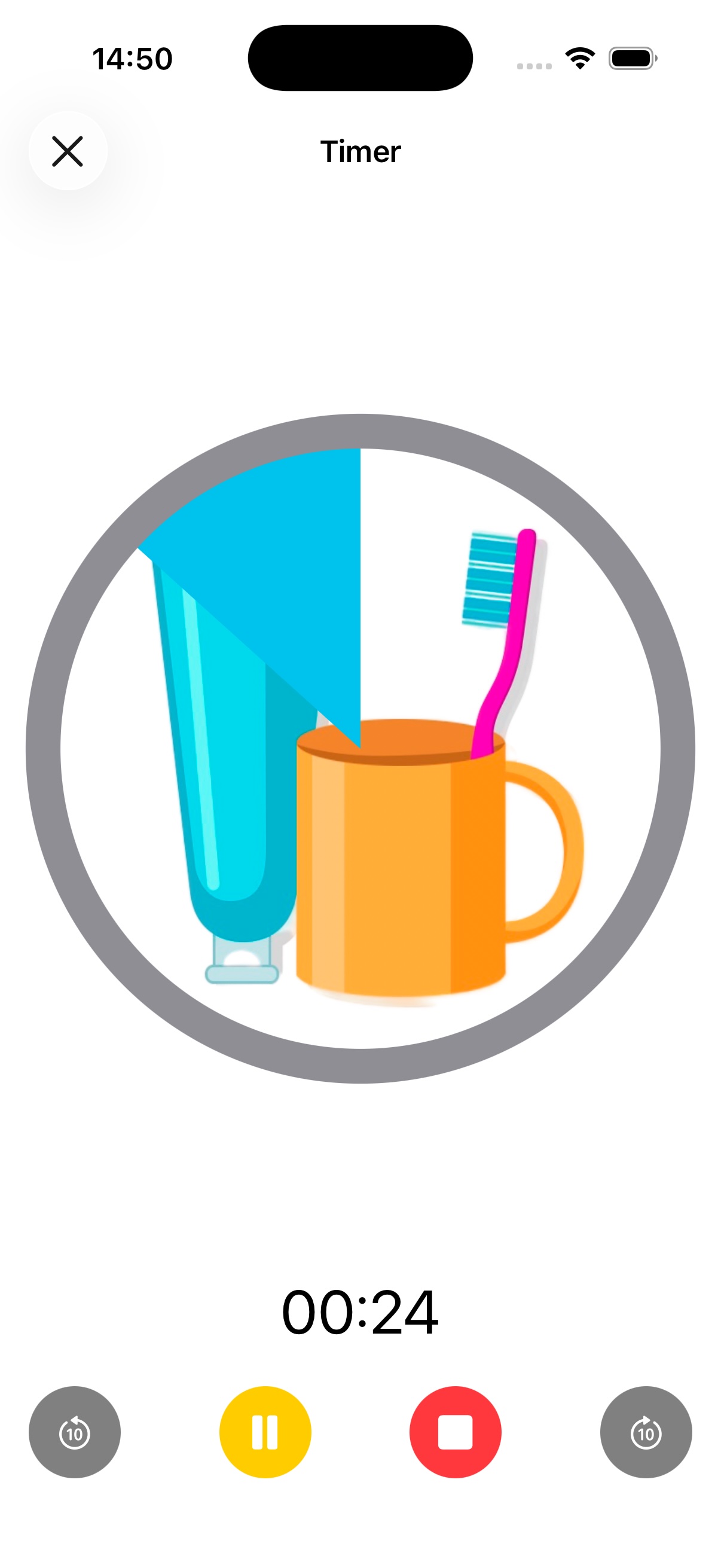
- Visible time — a full-screen visual timer makes "5 more minutes" something a child can watch, with a final countdown and sound so the end never ambushes them.
- External prompts — alerts and reminders fire at the scheduled time, so the app does the nagging instead of you.
- Immediate reward — ADHD brains are wired for now, not later. Tapping the checkbox gives instant feedback, and finishing the schedule triggers a confetti celebration. Small, immediate, every time.
Set it up in Visual Schedule
- Create the routine with your child, not for them. Kids follow plans they helped make. Add each step and let them choose the icons — 130+ built in, or photos, Pixabay images and AI-generated icons.
- Break fuzzy tasks into concrete tiles. "Get ready" is invisible to an ADHD brain; "clothes on → teeth → shoes → backpack" is followable.
- Attach a timer to the stall-out steps. Getting dressed taking 40 minutes? A 10-minute visual timer turns it into a beatable game.
- Set reminders on time-critical tasks so leaving for school doesn't depend on anyone watching the clock.
- Keep the wins visible. Completed checkmarks stay on screen — a running record of "I'm doing it," which matters enormously for kids who hear a lot of correction.
Keep it working (the consistency problem)
ADHD routines fail from boredom as much as difficulty. Refresh icons occasionally, celebrate streaks, and adjust the schedule as seasons change — edits take seconds, so the schedule can evolve as fast as your child does.
Looking at other apps too? See our honest comparison of visual schedule apps for kids with ADHD or autism, including where each one beats ours.
Let the app do the reminding
Visual routines, focus timers, reminders and instant rewards — built for brains that need to see the plan. Free on iPhone & iPad.
Download Visual Schedule free