Why bedtime becomes a battle
From a child's point of view, bedtime is the worst transition of the day: play ends, the fun people leave, and it arrives as a surprise announcement ("bedtime!") with no warning. Add an overtired brain and you get negotiation, stalling and tears. Pediatric guidance points the same way: the American Academy of Pediatrics built its "Brush, Book, Bed" program around a consistent, predictable pre-sleep routine — in its words, "Having a predictable nighttime routine can help your child understand and learn to expect what comes next."
Make the wind-down visible
A bedtime routine chart shows the whole descent in pictures: dinner → bath → pajamas → teeth → story → cuddle → lights out. Two things change immediately:
- Bedtime stops being a surprise. The child can see it coming from three tiles away — and a countdown timer on the last play block replaces the dreaded sudden "time's up."
- The chart becomes the authority. "The schedule says teeth now" is remarkably harder to argue with than a parent — there's no negotiation partner.
Build it in Visual Schedule
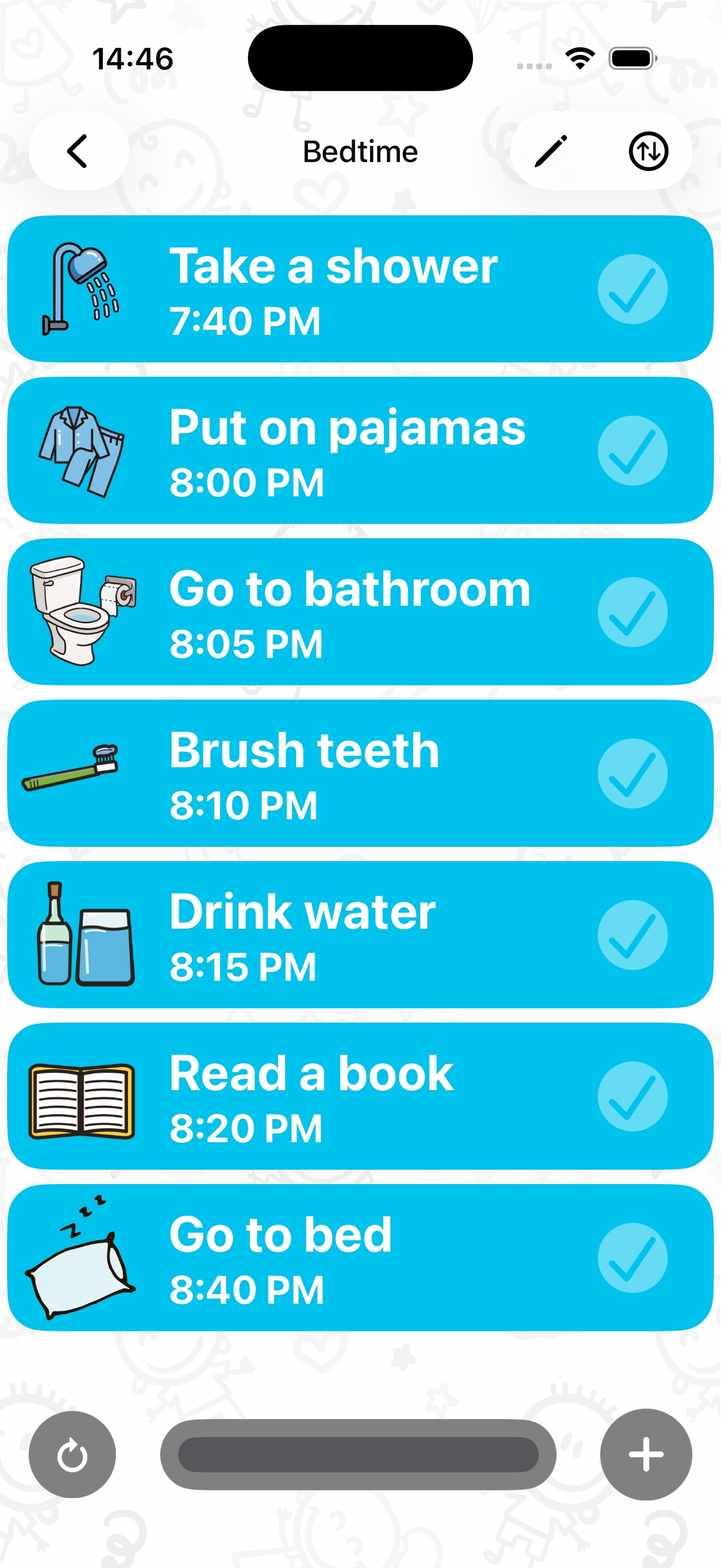
- Create an evening schedule starting ~60–90 minutes before target lights-out. Use a template or add tiles with your child.
- Choose calming icons together — bath, pajamas, toothbrush, book, moon. Or use a photo of your child's own bed and favorite book; familiar images are extra soothing.
- Set a reminder on the first tile (e.g. 7:00 pm "bath time") so the wind-down starts at the same moment every night — consistency is what trains the body clock.
- Put a visual timer on the last play activity with the final-countdown alert on, so ending play is announced by the timer, not ambushed by you.
- End with a check-off ritual. The last tap of the day — and its confetti — ends the evening on a win, which is exactly the mood you want a child to fall asleep in.
For kids with autism or ADHD
A predictable bedtime sequence helps exactly where autistic and ADHD kids struggle most: transitions and time blindness. The same visual schedule handles the morning too — many families run a morning chart and a bedtime chart in the same app, per child, using Kid Profiles.
Tonight's bedtime, minus the battle
Build a picture-based bedtime routine in minutes — timers warn, icons guide, confetti rewards. Free on iPhone & iPad.
Download Visual Schedule free