Why transitions trigger meltdowns
A transition asks a child to abandon something engaging, shift to something unknown, and do it on someone else's sudden command. For autistic children — who often rely on predictability to feel safe, and who may be deeply absorbed in the current activity — an unannounced "time to go!" is genuinely destabilizing. This is a recognized trait, not a quirk: the NHS lists being "worried or upset by changes in routine or their environment and new situations" among the signs of autism in children. The meltdown isn't misbehavior; it's the crash of an unprepared nervous system.
The strategy stack (what actually works)
Every strategy below is a form of visual support — an evidence-based practice for autism in the National Clearinghouse on Autism Evidence & Practice's 2020 review.
- Preview the day. Walk through the visual schedule together each morning (or the night before). A transition your child saw coming eight tiles ago is not a surprise.
- Show what's next, always. The single most powerful cue: at any moment, the child can look and see the current tile and the next one. Uncertainty is the fuel of transition anxiety — remove it.
- Count down the ending. Verbal warnings evaporate; a visible timer doesn't. Run a 5-minute countdown on the ending activity, with the final-countdown alert on, so the end is watched rather than announced.
- Make completion active. Checking off the finished activity is a small closing ritual — it tells the brain "this chapter is done" before the next begins.
- Sweeten the destination. When the next tile is neutral or hard, borrow the first-then pattern: make sure something preferred is visible right after it.
Doing all of this in one app
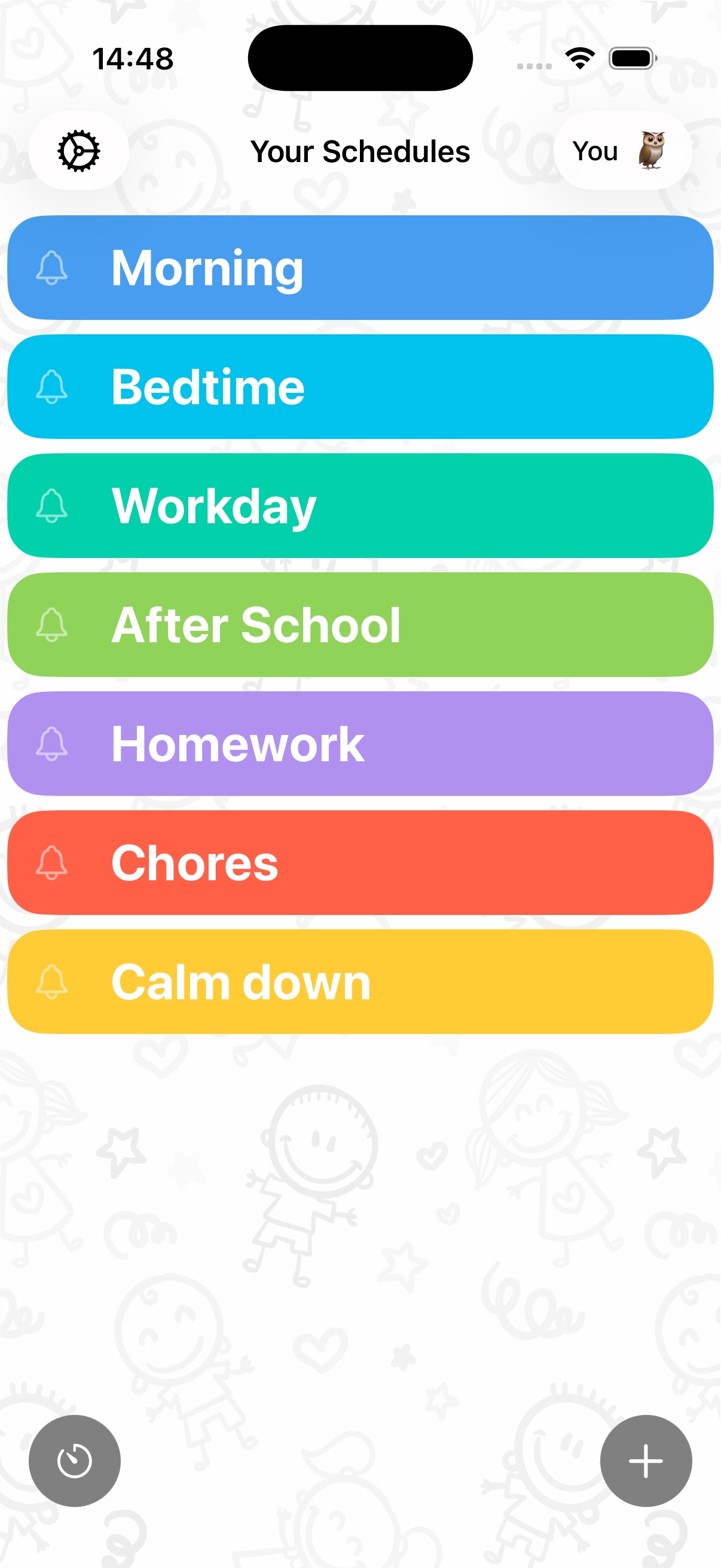
Every element of the stack is built into Visual Schedule: the day as a visible sequence of icon or photo tiles, full-screen task timers with final countdowns, reminders that announce upcoming activities, tap-to-complete checkboxes, and a confetti celebration that ends the day on a good note. For changes in plan — the therapy session that got cancelled — edit the tile together with your child, so even the disruption is previewed.
When a transition still goes wrong
It happens. Keep the schedule out of the conflict — it's the safe, neutral object. Once your child is regulated, return to it together, check off what's done, and re-enter the day at the current tile. The routine surviving a bad moment is itself the lesson: the structure holds.
Make what's-next visible, always
Previews, countdowns, and a day your child can see — the whole transition toolkit in one free app.
Download Visual Schedule free